
Written by Anchor Health Anchor Health provides compassionate mental health care for adolescents, teens, and adults experiencing mood disorders, anxiety, trauma, self-injurious behaviors, eating disorders, and life transitions.
Updated: 09/02/26
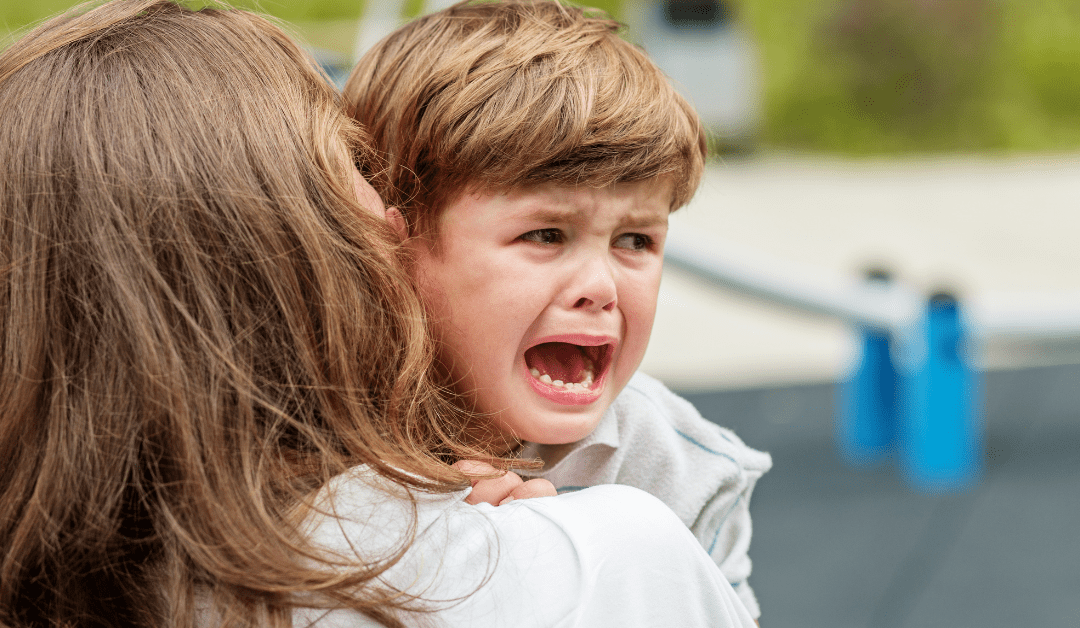
Many kids spend the school day holding in stress, frustration, or overstimulation just to make it through, and home becomes the safe place where those feelings finally come out. This pattern, sometimes called restraint collapse, is common and usually means your child trusts you enough to let their guard down. Understanding what’s behind the meltdown can help you respond in a way that actually helps.
Key Takeaways
- After-school restraint collapse is a real and well-documented pattern. It reflects the effort children spend managing themselves at school, not a problem with your parenting or your home environment.
- The fact that your child falls apart with you specifically is often a sign of secure attachment, not a sign that something is wrong.
- How you respond in the moment matters more than preventing the meltdown. Staying regulated and present tends to shorten the collapse rather than extend it.
- When the pattern is severe, worsening, or accompanied by other signs of distress, professional support is appropriate and effective.
Table of Contents
- Why does my child seem fine at school but fall apart at home?
- Is this behavior a sign of anxiety or something else?
- How should I respond when my child melts down after school?
- Will this get better on its own, or does it need more support?
- What can teachers or the school tell me about how my child is doing?
- How do I help my child feel more regulated after school?
- FAQ
Why does my child seem fine at school but fall apart at home?
Because home is where your child does not have to hold it together anymore.
The Institute of Child Psychology’s overview of after-school restraint collapse describes how children expend significant effort managing their behavior, emotions, and social interactions throughout the school day. They follow directions, navigate peer relationships, manage frustration, stay seated, wait their turn, and process a high volume of sensory and cognitive input. All of that takes sustained self-regulatory effort, and self-regulation is a finite resource.
By the time the school day ends, most of that resource has been spent. Home is the environment where the rules relax, where unconditional acceptance is available, and where the consequences of falling apart are lower than they would be at school. The child’s nervous system registers this shift and releases what it has been holding. The meltdown is not manipulation. It is the overflow of a system that has been running at capacity all day.
Counterintuitively, a child who saves their biggest emotional expressions for you is often a child with a secure attachment relationship. They trust that you can handle it. That is not a problem. It is a feature of the parent-child relationship, even when it is genuinely exhausting to be on the receiving end of.
Is this behavior a sign of anxiety or something else?
It can be a sign of anxiety, but it does not have to be.
For many children, after-school restraint collapse is a normal feature of their developmental stage. The demands of the school day exceed the self-regulatory capacity they currently have, and the result is predictable overflow at home. This is particularly common in younger children, in children who are managing a high level of sensory input, and in children who are navigating something socially demanding at school.
When anxiety is part of the picture, the after-school collapse may be more intense, more prolonged, or accompanied by other signs: significant worry about school before it happens, physical symptoms like stomachaches in the morning, school avoidance, or a pervasive sense of dread that does not ease even on weekends.
ADHD often looks similar: the executive function demands of the school day are disproportionately taxing for children whose regulatory systems work differently, and the collapse at home reflects genuine depletion. Sensory processing differences produce similar patterns when the sensory environment of school has been overwhelming throughout the day.
The pattern itself does not diagnose anything. What it does is provide useful information about how much the school day is costing your child, which is worth understanding whether or not a formal diagnosis is involved.
How should I respond when my child melts down after school?
With as much calm presence as you can offer, without adding demands or requiring explanation during the peak of the meltdown.
The worst time to ask a child why they are upset, what happened at school, or what they need is while they are in the middle of falling apart. The emotional brain is running at full volume. The thinking brain that can respond to language, reason, or explanation is not available. Trying to engage it during the meltdown tends to extend rather than shorten the collapse.
What tends to help: staying physically nearby without crowding, keeping language brief and grounding (“I’ve got you, I’m right here”), ensuring the environment is safe, and providing a snack if your child is hungry. Hunger is one of the most reliable amplifiers of after-school dysregulation and is one of the most easily addressed.
Your own regulation is your most powerful tool. A parent who is visibly stressed or frustrated by the meltdown is adding to the child’s nervous system load. When you can stay calm and warm in the face of the collapse, you become a regulating presence rather than another demand the child has to manage.
Will this get better on its own, or does it need more support?
For most children, it improves naturally as self-regulation skills develop with age and as the demands of the school environment become more familiar.
Younger children have less developed emotional regulation capacity and fewer tools for managing the end-of-day depletion. The kindergartner who falls apart every afternoon will generally develop better resources by second or third grade. The key is whether the trajectory is improving over time, even gradually, or whether it is stable or worsening.
When the pattern has been running for months without improvement, when it is severe enough to significantly affect the family’s daily functioning, or when it is accompanied by other signs of distress during the school day or at other times, that is a signal that more support would be useful.
Anchor Health’s family coping skills resources offer practical tools for families navigating exactly this kind of pattern, including both skills for the child and guidance for parents on how to respond in ways that support regulation rather than extend the collapse.
What can teachers or the school tell me about how my child is doing?
Quite a bit, and the information is worth seeking even when you do not have a specific concern to raise.
A brief conversation with your child’s teacher about what the school day looks like, what they observe in terms of your child’s emotional state, attention, peer relationships, and any particular stressors, often provides context that explains what you are seeing at home. A child who is having a hard time socially, struggling with a specific subject, or managing a conflict with a peer may not be communicating that at home, but the teacher may have observed it.
Sharing what you are seeing at home is equally valuable in the other direction. Teachers who know that a child is arriving home in significant distress daily are better positioned to notice what in the school environment might be contributing. They can also be partners in creating a transition plan or a brief decompression window at the end of the school day.
This kind of communication works best when it is framed as collaborative curiosity rather than complaint. “I’ve noticed my child seems really depleted at the end of the day. I wanted to check in about how things are going during school” invites partnership.
How do I help my child feel more regulated after school?
By creating a predictable, low-demand buffer between the school day and the rest of the afternoon.
The transition from school to home is a high-risk window for children who struggle with after-school collapse. Building in a defined buffer period, somewhere between 20 to 40 minutes of unstructured, low-demand downtime before homework or activities, gives the nervous system a chance to settle.
What that looks like depends on the child. Some need to be alone in their room. Some need physical movement. Some need a snack and quiet screen time. Some need to be near you without being required to talk. Observing what your child gravitates toward in the after-school window and building that into the daily routine tends to work better than applying a generic strategy.
Snack timing matters. Blood sugar drops significantly in many children by late afternoon, and hunger amplifies every other form of dysregulation. A reliable after-school snack reduces one of the most modifiable variables in the after-school collapse pattern.
If your child’s after-school meltdowns have you feeling worried or unsure what to do, Anchor Health can help you understand what’s happening and find a path forward together.
FAQ
What is restraint collapse and why does it happen after school?
Restraint collapse describes the emotional and behavioral release that happens when a child returns to a safe environment after a day of sustained self-regulation effort. At school, children manage their behavior, emotions, and social interactions in ways that require continuous effort. By the end of the day, that self-regulatory capacity is depleted. Home, and particularly the primary caregiver, signals safety, which allows the child to release what they have been holding. The meltdown is the release, not the problem.
How can I tell if after-school meltdowns are normal or a bigger concern?
Normal after-school meltdowns tend to be time-limited, resolve with calm parental presence and a snack, and gradually improve as the school year progresses and the child adjusts to its demands. A bigger concern looks like: meltdowns that are very prolonged or very intense, that involve self-injury or significant aggression, that are worsening rather than improving over time, or that are accompanied by other signs of distress like school refusal, sleep disruption, or physical symptoms before school.
What can I do in the moment to help my child calm down after school?
Stay calm and present without adding demands. Keep language brief: “I’m here” or “you’re safe” is enough. Offer a snack. Reduce sensory input in the immediate environment. Do not ask questions or require explanation during the peak of the meltdown. Give the nervous system time to settle before attempting any conversation about what happened or what comes next. Your calm is the most available regulatory tool.
When should after-school meltdowns be discussed with a therapist?
When the pattern has been running for more than several weeks without improvement, when it is significantly affecting the family’s daily functioning, when it involves self-injury or significant aggression, or when you are uncertain whether the meltdowns reflect normal depletion or something more significant. A therapist can assess what is driving the pattern and provide both child-focused skills work and parent guidance on how to respond in ways that support recovery.
About Anchor Health
At Anchor Health, we help children and families understand what’s behind big emotions, including the after-school meltdowns that leave parents feeling unsure how to help. Our therapists work with children to build emotional regulation skills while guiding parents on how to respond in the moment and beyond. Care is available for children and teens across Illinois and Colorado, online or in person, tailored to your child’s needs. Support is here to help your whole family feel steadier, not just get through the tough afternoons.